
Kit To Detect Coronavirus On Doorknobs, Laptops Goes On Sale In Japan
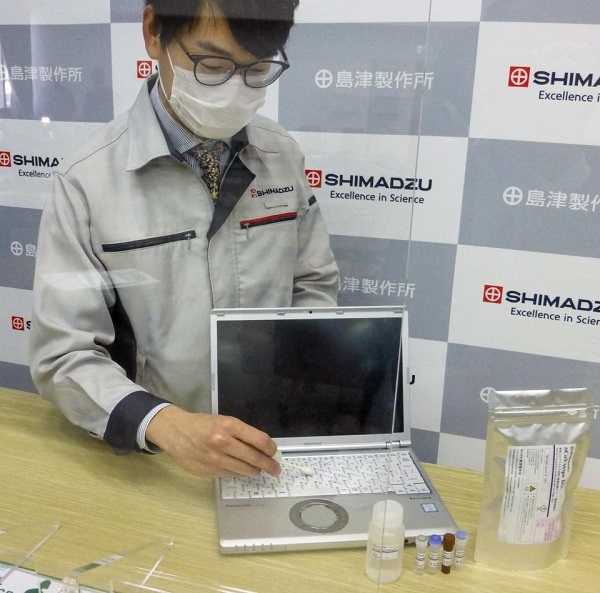
An employee of Shimadzu Corp. introduces a new test kit used to detect the novel coronavirus on inanimate surfaces in Kyoto on Feb. 8, 2021. (Kyodo)
Kit to detect Coronavirus on doorknobs, laptops goes on sale in Japan from Monday
Japanese precision equipment maker Shimadzu Corp. started selling on Monday test kits that can detect coronavirus on inanimate surfaces, including doorknobs, faucets, and computers, for the first time in the world.
The company said it expects to provide the new kit, which can identify the virus in about 100 minutes, to medical facilities and businesses that provide testing services including to nursing homes and food manufacturers.
Users of the kit wipe the surface of an object using a cotton swab and put it in a container with saline solution. After taking the cotton swab out of the container, test reagents are applied and the virus can then be detected using a PCR, or polymerase chain reaction, testing device, according to the company.
Each kit can conduct 100 tests and costs 302,500 yen ($2,800). The company, based in Kyoto Prefecture in western Japan, said it aims to sell a thousand test kits annually.
“With the addition of this kit, we want to offer ways to prevent infections comprehensively,” said a company official. Shimadzu has already introduced a test kit used to detect the virus from saliva.
Surface transmission is considered one of the ways the virus spreads from person to person.
According to a study by the U.S. National Institutes of Health, the virus lives up to 72 hours on plastic, 48 hours on stainless steel, and 24 hours on cardboard.
Source:
Feb 8, 2021 | KYODO NEWS